What if your biggest supply chain expense isn't freight, but time? Explore how demurrage and detention silently erode profitability and how intelligent optimization changes the equation.
Demurrage and Detention: The Mathematics of Hidden Supply Chain Costs
Introduction
Global supply chains have evolved into extraordinarily sophisticated ecosystems where thousands of decisions are made every day. Organizations negotiate freight contracts, optimize transportation routes, forecast inventory requirements, and invest millions in warehouse automation. Yet despite these advances, many businesses continue to lose substantial amounts of money through one of the least appreciated operational risks—demurrage and detention. These charges are often viewed as unavoidable expenses associated with international shipping. In reality, they are measurable indicators of inefficiency that reveal weaknesses in planning, coordination, and decision-making. From the perspective of mathematics and operations research, demurrage and detention are not isolated logistics fees but variables within a much larger optimization problem that directly influences profitability, working capital, customer satisfaction, and long-term competitiveness.
Beyond Simple Port Charges
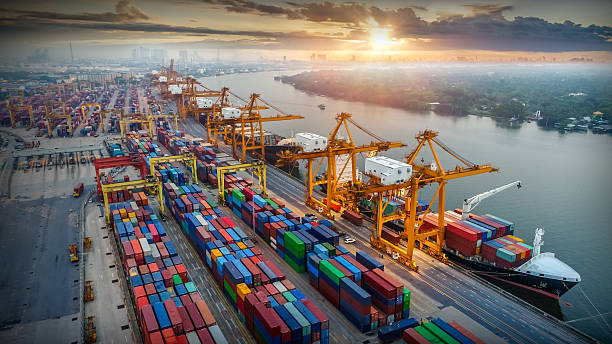
Demurrage refers to the charges incurred when imported or exported containers remain inside a port terminal beyond the allocated free storage period. Detention, by contrast, applies when containers have already left the terminal but are not returned to the shipping line within the agreed timeframe. While these definitions appear straightforward, they barely capture the true economic significance of these costs. Every additional day a container remains stationary represents more than a financial penalty. It signifies delayed inventory availability, disrupted production schedules, constrained cash flow, increased transportation complexity, and growing uncertainty throughout the supply chain. What appears on an invoice as a daily storage charge is often only a fraction of the total financial impact.
The mathematics behind these costs is surprisingly profound. Consider an enterprise handling several hundred containers annually. Even a modest delay of three or four days per shipment can accumulate into hundreds of thousands of dollars in direct penalties over the course of a year. However, direct charges represent only the visible portion of the problem. Delayed shipments increase inventory carrying costs, reduce asset utilization, create production bottlenecks, and may ultimately lead to missed customer commitments. In economic terms, demurrage and detention generate both explicit and implicit costs, making their true financial burden significantly greater than traditional accounting reports suggest.
A Problem of Optimization Rather Than Administration
Many organizations continue to treat demurrage and detention as administrative matters managed by logistics teams. This perspective overlooks their mathematical nature. Every shipment involves a series of interconnected decisions regarding customs clearance, transportation scheduling, warehouse capacity, labor allocation, inventory prioritization, and delivery sequencing. These decisions occur under numerous operational constraints and constantly changing conditions. Optimizing one element without considering the broader system frequently leads to inefficiencies elsewhere.
This is precisely the type of challenge addressed by Operations Research and Mathematical Optimization. Rather than relying on intuition or historical experience, optimization models evaluate thousands of feasible alternatives while simultaneously considering transportation costs, warehouse availability, contractual obligations, delivery deadlines, and resource limitations. The objective is not merely to reduce penalties but to identify the decision that minimizes the total cost of the entire logistics network while satisfying every operational constraint.
The Role of Uncertainty
One of the greatest challenges in logistics is uncertainty. Vessel arrivals change because of weather conditions, customs inspections vary in duration, transportation networks experience congestion, and customer demand fluctuates continuously. Traditional planning methods often assume that future events will unfold exactly as expected, an assumption that rarely reflects operational reality.
This is where probabilistic modeling becomes indispensable. Monte Carlo Simulation enables organizations to evaluate thousands of possible scenarios by incorporating uncertainty directly into decision-making. Instead of producing a single forecast, simulation generates probability distributions that quantify the likelihood of different outcomes. Decision-makers can therefore understand not only the expected cost of demurrage or detention but also the probability of extreme events that may significantly disrupt operations. This transforms planning from reactive problem-solving into proactive risk management.
Why Artificial Intelligence Alone Is Not Enough
Artificial Intelligence has introduced remarkable capabilities into modern logistics. Machine learning algorithms can identify patterns within historical shipment data, while large language models can summarize operational reports and support knowledge management. These technologies undoubtedly improve visibility across the supply chain. However, recognizing patterns is fundamentally different from determining mathematically optimal decisions.
Knowing that a shipment is likely to incur detention charges does not automatically identify the best corrective action. Should transportation schedules be adjusted? Should warehouse priorities change? Would reallocating labor reduce overall costs? These questions involve constrained optimization rather than prediction. Artificial intelligence excels at estimating probabilities, but deterministic optimization determines the optimal course of action. The future of intelligent logistics therefore lies not in replacing mathematical models with AI but in integrating predictive intelligence with rigorous optimization techniques.
Transforming Data into Decisions
Modern logistics organizations generate enormous volumes of operational data every hour. Ports, carriers, customs authorities, warehouses, transportation providers, and enterprise systems continuously produce information describing every stage of container movement. Yet data alone has little strategic value unless it informs better decisions.
Decision Intelligence represents the next stage in supply chain evolution. Rather than merely reporting historical events through dashboards, decision intelligence combines predictive analytics, mathematical optimization, simulation, and enterprise knowledge to recommend the most effective operational strategy before problems arise. In this framework, demurrage and detention are no longer treated as unavoidable expenses but as optimization variables that can be systematically minimized through intelligent planning.
The ZJ Logix Perspective
At ZJ Logix, we believe that logistics excellence is ultimately a mathematical discipline. Every operational decision can be represented, analyzed, and optimized through quantitative models that account for uncertainty, operational constraints, and business objectives simultaneously. Our approach integrates Operations Research, Mathematical Optimization, Monte Carlo Simulation, Predictive Analytics, Knowledge Graphs, and Explainable Artificial Intelligence to build deterministic decision systems that move beyond reporting and prediction. The objective is not simply to identify inefficiencies after they occur but to design decision frameworks capable of preventing them altogether.
Conclusion
Demurrage and detention are often perceived as routine logistics charges, yet they reveal far more about an organization's operational maturity than their invoices suggest. They expose inefficiencies in planning, coordination, and resource utilization while simultaneously highlighting opportunities for mathematical optimization and strategic improvement. As global supply chains continue to increase in complexity, competitive advantage will belong to organizations that replace reactive management with quantitative decision-making. The future of logistics will not be defined solely by faster transportation or larger warehouses, but by the ability to transform uncertainty into measurable intelligence and operational complexity into mathematically optimal decisions. In an increasingly data-driven world, the organizations that master this transition will not merely reduce logistics costs—they will redefine how supply chains create value.